Tag Archives: geography

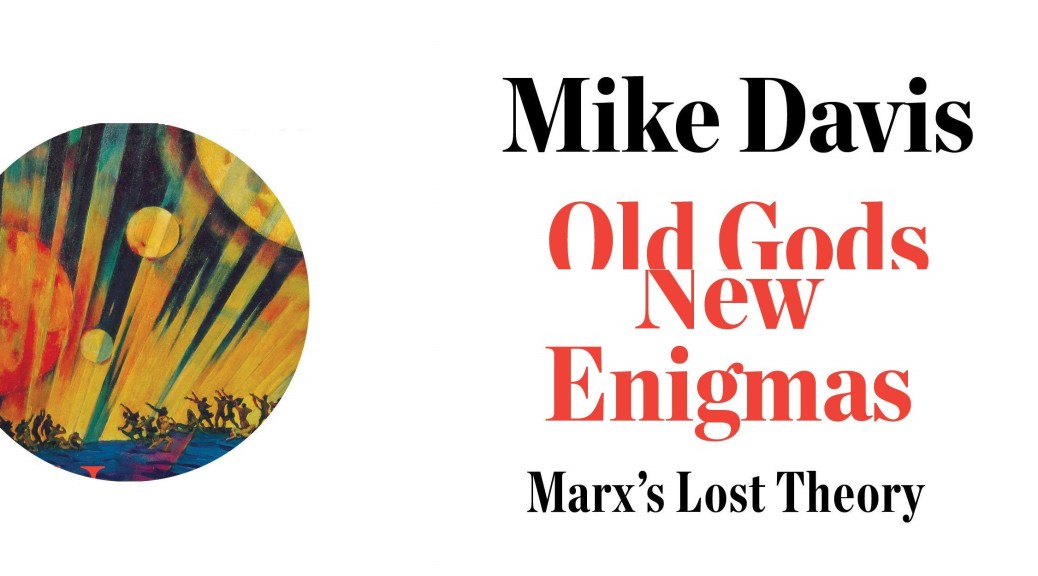
Wednesday 25th October 2023: Old Gods, New Enigmas by Mike Davis

On Wednesday 25th October 2023, from 7.30-9.30pm, Stroud Radical Reading Group will discuss Old Gods, New Enigmas by Mike Davis. Davis died on October 25th last year, and we will meet to honour his life and work on the anniversary of his death. Davis was an American writer, political activist, urban theorist, and historian based in Southern California. He was been described as the “Best Socialist Writer of the Last Half Century“.

As usual we’ll discuss what we made of the book and how it might be relevant to us in our own lives. We will focus on Chapter 4 – “Who Will Build the Ark?” which explores global warming, how “city life is rapidly destroying the ecological niche-Holocene climate stability-which made its evolution and complexity possible”, and “the city as its own solution”. We enourage people to read the whole book but you are also welcome even if you haven’t read even the Chapter – to listen to the discussion and ask questions.

On this webpage you can find free resources, details to buy the book at a discount, and information about the author, the book, how our sessions work, and the venue. We’re planning to once again be at the SISTER House – as this is a building Stroud in Internationalist Solidarity Together for Earth Repairs (SISTER) have reclaimed on Lansdown Road.

You can currently get a 20% discount on Old Gods, New Enigmas from publishers Verso – making it £9.59 instead of £11.99 RRP.

Freely available resources related to the book are available below. We like to ensure everyone can attendee our sessions and get something out of them even if they can’t afford to buy a copy of the book or the time to read it. We would encourage people to read/listen to as much as possible, but you are welcome to attend and listen along even if you are unable to engage with any of the below. Audio/visual materials are provided for anyone who prefers these to reading – don’t feel you have to read content to attend the ‘reading’ group. The aim is to discuss the ideas – however they have been presented.

Free resources

This book is the second in a 3-part series on Crisis, Mutual Aid, and Radical Action, which will also cover work by the Care Collective (full details to follow). You can come even if you didn’t attend the previous event, and you don’t have to come to the next one.

About the author and the book

Publishers Verso say:

“Mike Davis spent years working factory jobs and sitting behind the wheel of an eighteen wheeler before his profile as one of the world’s leading urbanists emerged with the publication of his sober, if dystopian survey of Los Angeles. Since then, he’s developed a reputation not only for his caustic analysis of ecological catastrophe and colonial history, but as a stylist without peer.

Old Gods, New Enigmas is Davis’s book-length engagement with Karl Marx, marking the 200th anniversary of Marx’s birth and exploring Davis’s thinking on history, labor, capitalism, and revolution – themes ever present the early work from this leading radical thinker. This will be his first book on Marxism itself.

In a time of ubiquitous disgust with political and economic elites, explores the question of revolutionary agency—what social forces and conditions do we need to transform the current order?—and the situation of the world’s working classes from the US to Europe to China. Even the most preliminary tasks are daunting. A new theory of revolution needs to return to the big issues in classical socialist thought, such as clarifying “proletarian agency”, before turning to the urgent questions of our time: global warming, the social and economic gutting of the rustbelt, and the city’s demographic eclipse of the countryside. What does revolution look like after the end of history?”

Endorsements:

“There is no one better at building on Marx’s legacy of profound and engaged politcal analysis than Mike Davis” – Leo Panitch

“The heterogeneity of Davis’s latest book Old Gods, New Enigmas reflects his decades of accumulated interests…a formidable intellectual, and this collection contains many gems.” – Troy Vettese,  Boston Review

How Europe Underdeveloped Africa – Nov 17th 2021

On November 17th, we will discuss Walter Rodney’s 1972 classic book “How Europe Underdeveloped Africa”. This is an online event, which will be held via videocall. Anyone is welcome, but we keep link details private – please contact us for the Zoom details. The book is part of a series on how modern inequality was built which included Silvia Federici’s Caliban and the Witch, David Graeber’s Debt and Jason Hickel’s The Divide – but you do not need to have attended preceding events to join us to discuss Rodney’s book.

Walter Rodney was a leader of Black Power and Pan-African movements, including the Guyanese Working People’s Alliance. He was internationally reknowned as a historian of colonialism – and for linking struggles for independence on the African continent with struggles of working class Black people in North America and the Caribbean.

How Europe Underdeveloped Africa is an ambitious masterwork of political economy, detailing the impact of slavery and colonialism on the history of international capitalism. In this classic book, Rodney makes the unflinching case that African “mal-development” is not a natural feature of geography, but a direct product of imperial extraction from the continent, a practice that continues up into the present. Meticulously researched, How Europe Underdeveloped Africa remains a relevant study for understanding the so-called “great divergence” between Africa and Europe, just as it remains a prescient resource for grasping the multiplication of global inequality today.” – publishers, Verso

Stroud Radical Reading Group events are free to attend. You are welcome to attend to listen to the discussion even if you do not have time to engage with any of the content. Free resources are listed below, but if you can, please buy a copy of the book from the Yellow Lighted Bookshop using the following link (adding the “StroudRadical” Coupon Code will get you 10% off the £16.99 standard price): How Europe Underdeveloped Africa by Walter Rodney.

You can access the following free:

Chapter 4 audio:

CaribNation TV featuring an interview with Prof Rupert Lewis:

Geographies and Histories of Racial Capitalism. SRRG 2020 series 3

Between July 29th and November 25th, Stroud Radical Reading Group will host a series of discussions exploring Racial Capitalism. Each of these events will be held on the last Wednesday of the month, 7.30-9.30pm – online via video call (we will continue to assess when it may be appropriate to host indoor events). You will need to register for the events via Eventbrite in order to access details of the video calls (this is free, will prevent any ‘trolling’ of calls, and enable reminders).

As ever, Stroud Radical Reading Group events are free to attend. Please contact us about any accessibility requirements. We aim to make the sessions a welcoming space for anyone interested in the topics. You do not need to have a university education or have ever been to a reading group before, and we even welcome people who have not read the text but would like to listen to the discussion. Please contact us if you have any questions or would like to know more about how the sessions are run. If you are on Facebook, please also join our Facebook group.

July 29th – Geographies of Racial Capitalism with Ruth Wilson Gilmore

We will start this series by focussing our discussion not on a text but on a 17 minute Antipode Foundation film – “Geographies of Racial Capitalism with Ruth Wilson Gilmore”.

For those who wish to read a short text to accompany this video, we recommend “Black matters are spatial matters: Black geographies for the twenty-first century (pdf)” by Camilla Hawthorne. Referencing the work of Ruth Wilson Gilmore, and the Black Radical tradition, this paper explores how “scholars of Black Geographies insist that racism and capitalism are fundamentally intertwined and that this relationship is both structured by and structuring of space”.

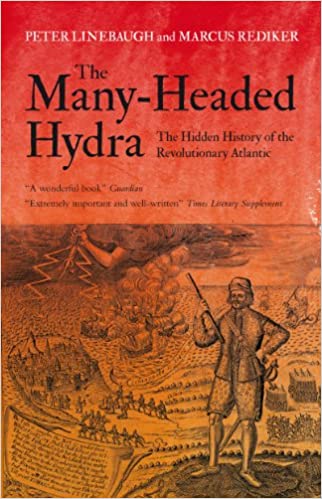
September 30th – “The Many-Headed Hydra: Sailors, slaves, commoners, and the hidden history of the revolutionary Atlantic” by Peter Linebaugh and Marcus Rediker

The expansion of trade and colonization in the early seventeenth century launched the first global economy, a vast, diverse, and landless workforce was born. These workers crossed national, ethnic, and racial boundaries, as they circulated around the Atlantic world on trade ships and slave ships, from England to Virginia, from Africa to Barbados, and from the Americas back to Europe.

Marshalling an impressive range of original research from archives in the Americas and Europe, the authors show how ordinary working people led dozens of rebellions on both sides of the North Atlantic. The rulers of the day called the multiethnic rebels a ‘hydra’ and brutally suppressed their risings, yet some of their ideas fuelled the age of revolution. The full text of The Many-Headed Hydra is available online as a pdf. We will focus our discussion on the Introduction and Chapter 6 – “The Outcasts of The Nations of The Earth”, but please read as much of the book beyond this as you are able to. For more details of the event: Many Headed Hydra.

October 28th – “The Black Jacobins: Toussaint L’Ouverture and the San Domingo revolution” by C.L.R. James

CLR James provides the definitive account of the Haitian Revolution of 1794-1803 and the story of the French colony of San Domingo. It is also the story of Toussaint L’Ouverture, who led the black people of San Domingo in a successful struggle against successive invasions by overwhelming French, Spanish, and English forces – helping to form the first independent nation in the Caribbean, and inspiring anti-colonial movements around the world.

The full text of The Black Jacobins is available online as a “.mobi” ebook file. We encourage people to read the whole book, and as much as possible if not. More details of this event: The Black Jacobins. Download the intro and Chapter 2 as a pdf via the link below:

November 25th – “(B)Ordering Britain: Law, race and empire” by Nadine El-Enany.

(B)ordering Britain argues that Britain is the spoils of empire, its immigration law is colonial violence and irregular immigration is anti-colonial resistance. The British Empire, about which Britons know little, can be remembered fondly as a moment of past glory, as a gift once given to the world. Meanwhile immigration laws are justified on the basis that they keep the undeserving hordes out.

Bordering Britain argues that – no matter what the law, media and political discourse dictate – people with personal, ancestral or geographical links to colonialism, or those existing under the weight of its legacy of race and racism, should have every right to come to Britain and take back what is theirs.

We will focus our discussion on the introduction to Bordering Britain – available free online (pdf) as a sample chapter from the publishers. You are welcome and encouraged to read more, but we appreciate that the £20 price tag for the hardcover book (and sadly the e-book version as well) may be unaffordable – which is why the focus of our discussion will be on the freely available text.