
Tag Archives: Colonialism

Sunday 30th July 2023: After Geoengineering by Holly Jean Buck

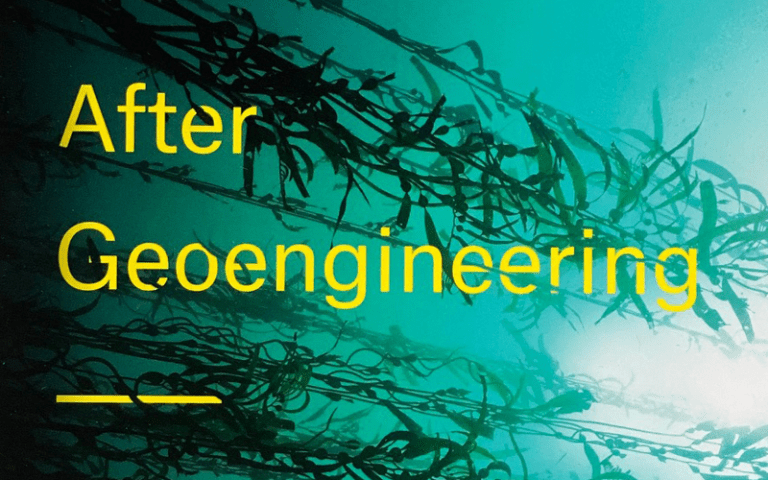
On Sunday 30th July 2023, from 7.30-9.30pm at The RYSE, 2 Bath St, Stroud Radical Reading Group will discuss After Geoengineering: Climate Trajedy, Repair, and Restoration, by Holly Jean Buck. The book explores how “We are right to fear that geoengineering will be used to maintain the status quo” but asks “is there another possible future after geoengineering?”. On this webpage you can find a link to buy the book at a discount, free resources, and information about the author, the book, how our sessions work, and the venue.

At the time of writing, you can buy a copy of the book from publishers Verso for £11.89 (hardback) or £7 (ebook). Both prices represent a 30% discount on the RRP.

This discussion is part our series on climate change, but you are welcome to join the discussion even if you cannot make the other events. You are also welcome even if you haven’t read the book or the free section of it available below – to listen to the discussion and ask questions.

Freely available resources related to the book are available below. We like to ensure everyone can attendee our sessions and get something out of them even if they can’t afford to buy a copy of the book or the time to read it. We would encourage people to read/listen to as much as possible, but you are welcome to attend and listen along even if you are unable to engage with any of the below.

Free resources

Freely available resources related to the book are available below. We like to ensure everyone can attendee our sessions and get something out of them even if they can’t afford to buy a copy of the book or the time to read it. We would encourage people to read/listen to as much as possible, but you are welcome to attend and listen along even if you are unable to engage with any of the below:

About the author and the book

Holly Jean Buck is a geographer and environmental social scientist studying rural futures, the politics of platforms, and how emerging technologies can address environmental challenges. She works as an Assistant Professor of Environment and Sustainability at the University at Buffalo in Buffalo, New York. She is also the author of Ending Fossil Fuels: Why Net Zero Is Not Enough.

“Climate engineering is a dystopian project. But as the human species hurtles ever faster towards its own extinction, geoengineering as a temporary fix, to buy time for carbon removal, is a seductive idea. We are right to fear that geoengineering will be used to maintain the status quo, but is there another possible future after geoengineering? Can these technologies and practices be used to bring carbon levels back down to pre-industrial levels? Are there possibilities for massive intentional intervention in the climate that are democratic, decentralised, or participatory?

These questions are provocative, because they go against a binary that has become common sense: geoengineering is assumed to be on the side of industrial agriculture, inequality and ecomodernism, in opposition to degrowth, renewable energy, sustainable agriculture and climate justice. After Geoengineering rejects this binary, to ask: what if the people seized the means of climate production? Both critical and utopian, the book examines the possible futures after geoengineering. Rejecting the idea that geoengineering is some kind of easy work-around, Holly Buck outlines the kind of social transformation that would be necessary to enact a programme of geoengineering in the first place.”

Endorsements:

“In the face of rapid climate change, how should we think about geoengineering? In this timely and bold book, Holly Jean Buck lays out a case for approaching geoengineering from the Left. Blending journalistic insight with scientific speculation, After Geoenginneeringinspires much-needed thought experiments about the changes coming to our warmer and weirder world.

Joel Wainwright, author of Decolonizing Development, Geopiracy, and Climate Leviathan (with Geoff Mann)

This is the guide to the future. There’s hardly anything scarier than geoengineering, but it is coming towards us, closer for every day of CO2 spewed into the air. It can no longer be wished away – and thankfully, we have Holly Jean Buck to explain what it might look like and how it could be survived, perhaps even used for the good of the planet. Written in graceful prose, combining the latest science with the crystal ball of a sci-fi author, this book shines. Anyone worried about what comes next should read it.

Andreas Malm, author of The Progress of This Storm and Fossil Capital

About Stroud Radical Reading Group events and the venue

Our events are free to attend, though we will collect donations to cover the costs of venue hire on a donate-what-you-can-afford basis. We try to ensure the discussions are welcoming to new people, including people who have never been to a reading group before – and you don’t have to have been to university. You don’t even have to have read any of the book – you can just come along and listen to the discussion. Some free resources including a sample chapter we’ll focus our discussion on are included above, and we’d encourage people to read/listen to as much as they can ahead of the session.

James facilitates the sessions, which we start and finish with everyone having a short time to introduce themselves, and mention something that struck them about the reading or which they’d like to discuss. The conversation then flows, with people using hands to indicate they’d like to speak – and we try to make sure everyone gets a chance. Sometimes we identify particular questions to think about during a session or even before it.

The RYSE is a new venue for us – it is accessed by a staircase. Please contact us if you have any accessibility requirements, or other questions about how the events work.

We will keep windows open for ventilation, hand sanitiser is provided, and we ask people who are ill to stay away (whether they are ill with covid or something else). Attendees do not generally wear masks but we will be respectful to anyone who chooses to and other members may wear masks at request of other attendees – let us know your preferences in advance.

May 31st 2023: The Danger of Fossil Fascism


On Wednesday 31st May, from 7.30-9.30pm at The Exchange, Brick Row, Stroud (GL5 1DF), Stroud Radical Reading Group will discuss “White Skin, Black Fuel: On The Danger of Fossil Fascism” by Andreas Malm and the Zetkin Collective.

This discussion will be the fifth and final of a monthly series looking at antifascism. You do not need to attend previous sessions in the series to come to or get something out of this session, though of course we recommend coming along to the other sessions too (if you’ve heard about them in time).

We will focus our discussion on Chapter 8: “Mythical Energies of the Far Right” (pdf 352kb). The 9 page introduction is also available to download (pdf 161kb) or read on a laptop/desktop online (scroll to the bottom of this page).

The full book is currently available from publishers Verso at a 15% discount: White Skin, Black Fuel – £17.00 with a free-ebook instead of the RRP of £20, or £6 for the e-book alone.

Freely available resources related to the book are available below. We like to ensure everyone can attendee our sessions and get something out of them even if they can’t afford to buy a copy of the book or the time to read it. We would encourage people to read/listen to as much as possible, but you are welcome to attend and listen along even if you are unable to engage with any of the below.

Information about White Skin, Black Fuel from the publishers Verso:

“What does the rise of the far right mean for the battle against climate change? In the first study of the far right’s role in the climate crisis, White Skin, Black Fuel presents an eye-opening sweep of a novel political constellation, revealing its deep historical roots. Fossil-fuelled technologies were born steeped in racism. No one loved them more passionately than the classical fascists. Now right-wing forces have risen to the surface, some professing to have the solution—closing borders to save the nation as the climate breaks down. Epic and riveting, White Skin, Black Fuel traces a future of political fronts that can only heat up.”

About the Zetkin Collective

The Zetkin Collective is a group of scholars and activists working on the political ecology of the far right. It was formed around the Human Ecology division at Lund University in the summer of 2018. Conducting research in their native languages, the contributing authors to the book White Skin, Black Fuel are: Irma Allen, Anna Bartfai, Bernadette Barth, Lise Benoist, Julia Bittencourt Costa Moreira, Dounia Boukaouit, Clàudia Custodio, Philipa Olivia Dige, Ilaria di Meo, George Edwards, Morten Hesselbjerg, Ståle Holgersen, Claire Lagier, Andreas Malm, Sonja Pietiläinen, Daria Rivin, Line Skovlund Larsen, Luzia Strasser, Laudy van den Heuvel, Meike Vedder and Anoushka Eloise Zoob Carter.

Learn more about Zetkin Collective and its members on their website.”

About Stroud Radical Reading Group events and the venue

Our events are free to attend, though we will collect donations to cover the costs of venue hire on a donate-what-you-can-afford basis. We try to ensure the discussions are welcoming to new people, including people who have never been to a reading group before – and you don’t have to have been to university. You don’t even have to have read any of the book – you can just come along and listen to the discussion. Some free resources including a sample chapter we’ll focus our discussion on are included below though, and we’d encourage people to read/listen to as much as they can ahead of the session.

The Exchange has step-free access. We will keep windows open for ventilation, hand sanitiser is provided, and we ask people who are ill to stay away (whether they are ill with covid or something else). Attendees do not generally wear masks but we will be respectful to anyone who chooses to and other members may wear masks at request of other attendees – let us know your preferences in advance. Please contact us if you have any accessibility requirements, or other questions about how the events work.

How Europe Underdeveloped Africa – Nov 17th 2021

On November 17th, we will discuss Walter Rodney’s 1972 classic book “How Europe Underdeveloped Africa”. This is an online event, which will be held via videocall. Anyone is welcome, but we keep link details private – please contact us for the Zoom details. The book is part of a series on how modern inequality was built which included Silvia Federici’s Caliban and the Witch, David Graeber’s Debt and Jason Hickel’s The Divide – but you do not need to have attended preceding events to join us to discuss Rodney’s book.

Walter Rodney was a leader of Black Power and Pan-African movements, including the Guyanese Working People’s Alliance. He was internationally reknowned as a historian of colonialism – and for linking struggles for independence on the African continent with struggles of working class Black people in North America and the Caribbean.

How Europe Underdeveloped Africa is an ambitious masterwork of political economy, detailing the impact of slavery and colonialism on the history of international capitalism. In this classic book, Rodney makes the unflinching case that African “mal-development” is not a natural feature of geography, but a direct product of imperial extraction from the continent, a practice that continues up into the present. Meticulously researched, How Europe Underdeveloped Africa remains a relevant study for understanding the so-called “great divergence” between Africa and Europe, just as it remains a prescient resource for grasping the multiplication of global inequality today.” – publishers, Verso

Stroud Radical Reading Group events are free to attend. You are welcome to attend to listen to the discussion even if you do not have time to engage with any of the content. Free resources are listed below, but if you can, please buy a copy of the book from the Yellow Lighted Bookshop using the following link (adding the “StroudRadical” Coupon Code will get you 10% off the £16.99 standard price): How Europe Underdeveloped Africa by Walter Rodney.

You can access the following free:

Chapter 4 audio:

CaribNation TV featuring an interview with Prof Rupert Lewis:

November 25th: (B)Ordering Britain – Nadine El-ENany

Please join us online on November 25th, 7.30-9.30pm, to discuss “(B)Ordering Britain: Law, race and empire” by Nadine El-Enany. Register to access the free event via Eventbrite.

(B)ordering Britain argues that Britain is the spoils of empire, its immigration law is colonial violence and irregular immigration is anti-colonial resistance. The British Empire, about which Britons know little, can be remembered fondly as a moment of past glory, as a gift once given to the world. Meanwhile immigration laws are justified on the basis that they keep the undeserving hordes out.

Bordering Britain argues that – no matter what the law, media and political discourse dictate – people with personal, ancestral or geographical links to colonialism, or those existing under the weight of its legacy of race and racism, should have every right to come to Britain and take back what is theirs.

We will focus our discussion on the introduction to Bordering Britain – available free online (pdf) as a sample chapter from the publishers. You are welcome and encouraged to read more. The book is currently available from the publishers for £12 for the hardcover book (reduced from £20). You can also listen to the author, Nadine El-Enany, discussing the content and themes of the book with the Surviving Society podcast hosts (53 minutes), or read her blogpost, “Britain as the spoils of empire“.

You will need to register for the event via Eventbrite in order to access details of the video calls (this is free, will prevent any ‘trolling’ of calls, and enable reminders).

As ever, Stroud Radical Reading Group events are free to attend. Please contact us about any accessibility requirements. We aim to make the sessions a welcoming space for anyone interested in the topics. You do not need to have a university education or have ever been to a reading group before, and we even welcome people who have not read the text but would like to listen to the discussion. Please contact us if you have any questions or would like to know more about how the sessions are run. If you are on Facebook, please also join our Facebook group.

This book concludes our “Geographies and Histories of Racial Capitalism” series – but people are welcome to join if they have not attended previous events.